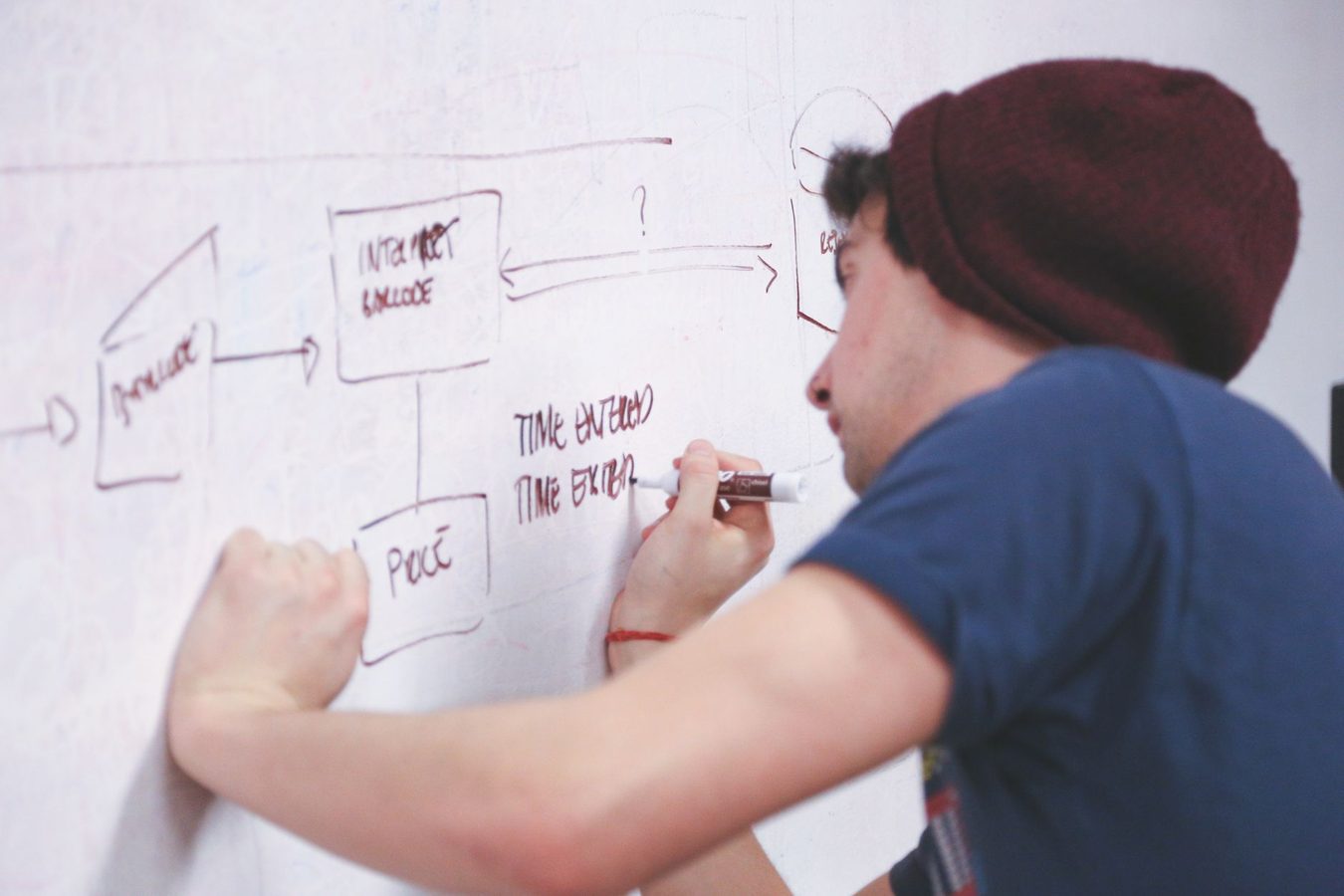
What we mean by a model, and what we mean by cost
A model of an information process is a simplified description of how something moves: what goes in, what happens to it on the way, where it rests, and what comes out at the far end. A school attendance register is a model. So is the routine a corner shop follows to count stock on a Sunday evening, and so is the form a GP surgery uses to record a new patient. None of them is the real world. Each is a deliberate reduction, kept only as detailed as somebody was willing to maintain week after week. That last clause is where cost enters. A model is not a drawing that sits still; it is a set of promises about work that will keep being done by people or machines, and those promises are paid for in instalments.
Cost, on this site, means more than an invoice. It includes the minutes spent typing a figure twice, the attention spent checking it, the software licence, the electricity, the training of a new colleague who inherits the spreadsheet, and the awkward afternoon when a number turns out to have been wrong since March. Some of these appear in pounds on a statement. Most appear as time, and time is the line item nobody writes down. When we talk about what drives the price of a model, we are asking which design decisions quietly commit somebody to recurring effort. A model that is cheap to draw can be expensive to live with, and the reverse happens just as often.
Four stages, four separate bills
Information processes are conventionally split into collection, processing, storage and transmission, and it is useful to keep them apart because each one is priced differently. Collection is priced by effort per item and by how fussy you are about accuracy: a tick box costs almost nothing, a measurement that must be verified by a second person costs several times more. Processing is priced by the number and depth of the relationships you insist on encoding — every extra rule, exception and cross-check is code or judgement that must be written once and then understood forever. Storage is priced by volume multiplied by time, and the time part is the half people forget when they decide to keep everything.
Transmission is priced by how fast, how reliable and how well formatted the handover has to be. Sending a monthly summary as a simple file to one colleague is nearly free. Sending the same information continuously, to several parties, in a format each of them can read without asking questions, is a different proposition entirely, and the cost is mostly in the agreement rather than the wires. Reading the four stages separately also shows where savings are real and where they are only moved. Trimming a collection form often pushes work into processing, because somebody must now infer what was not asked. The total is what matters, and the total is rarely visible from inside one stage.
Assumptions are the invisible line item
Every model rests on things nobody wrote down: that addresses in the United Kingdom fit a certain shape, that a date is always complete, that the working week has five days, that no customer will ever appear twice under slightly different spellings. These assumptions are what make a model affordable. Without them you would have to describe the entire world, which is the one thing a model exists to avoid. The difficulty is that assumptions are borrowed on interest. They cost nothing on the day they are made and become expensive on the day reality departs from them, usually while somebody is trying to explain a discrepancy to a person who does not care about data structures.
Limitations work the same way. A model that ignores part of its subject is not defective; it is scoped. The honest question is what an error inside that scope would actually cost — a rounding difference in an internal report is not the same as a missed appointment or a mis-addressed delivery. Putting a rough figure against being wrong is uncomfortable, but it is the only way to judge whether more checking is worth buying. Some models deserve heavy verification. Many do not, and spending on them is a habit rather than a decision. Knowing which of the two you are looking at is most of the skill.
How to read a price before you commit to it
A few questions expose most of the cost of a model before anyone builds it. Who supplies each input, how often, and what happens on the week they are unavailable? How many rules does the processing stage need before the output is trusted, and who will still understand them in two years? How long is information kept, and did anyone decide that, or did it simply accumulate? Which handovers cross a boundary between teams or organisations, because those are where formats are argued about and where delays get expensive? And finally: if this model is wrong, who notices, how quickly, and what does the correction involve?
None of these questions requires technical vocabulary, and none of them produces a single number. They produce a shape — a sense of where effort will concentrate and which parts will keep asking for attention. The topic pages on this site take each of those areas in turn, with everyday examples rather than case studies, and no advice about what you should buy. We describe how the costs arise and what tends to move them. Deciding what any of it is worth in your own situation stays with you, because value depends on things only you can see.